[카테고리:] 웰빙 & 휴식 철학

  • “발바닥 전체가 화끈거린다면?” 족근관 증후군(Tarsal Tunnel Syndrome)과 가자미근 단축

    “Burning Sensation Across Your Sole?” Tarsal Tunnel Syndrome and Soleus Muscle Shortening

    아침에 일어나 발을 디딜 때나 저녁 무렵 발바닥 전체가 화끈거리거나 찌릿찌릿한 전기 통증, 혹은 감각이 둔해진 느낌이 든다면 단순한 족저근막염이 아닐 수 있습니다. 이는 안쪽 복사뼈 뒤쪽을 지나는 신경 통로가 압박을 받는 ‘족근관 증후군(Tarsal Tunnel Syndrome)’일 가능성이 높으며, 그 핵심 원인 중 하나는 종아리 깊은 곳에 위치한 ‘가자미근(Soleus Muscle)’의 지속적인 단축입니다.

    https://sweetcareuy.creatorlink.net

    If you experience a burning sensation, tingling, electric pain, or numbness across the bottom of your foot, it might not be simple plantar fasciitis. These symptoms often point to Tarsal Tunnel Syndrome, a condition where the posterior tibial nerve gets compressed as it passes behind the inner ankle. A primary underlying cause is chronic shortening of the Soleus Muscle, located deep within the calf.

    가자미근은 무릎 아래부터 아킬레스건으로 이어지는 심층 근육으로, 서 있거나 걸을 때 체중을 지지하고 하체의 혈액을 위로 펌프질하는 중요한 역할을 합니다. 하지만 장시간 서 있거나 잘못된 보행 습관으로 가자미근과 아킬레스건이 굳어지면, 안쪽 복사뼈 아래 굴근지대(Flexor Retinaculum) 내부의 압력이 올라갑니다. 이로 인해 발바닥 전체로 갈라지는 후경골신경(Posterior Tibial Nerve)이 물리적으로 눌리면서 화끈거리는 신경통을 유발합니다.

    The soleus muscle lies beneath the gastrocnemius, connecting the lower leg to the Achilles tendon, playing a crucial role in maintaining upright posture and pumping blood back to the heart. However, prolonged standing or poor walking mechanics can cause the soleus and Achilles tendon to tighten, increasing pressure within the flexor retinaculum beneath the inner ankle. This directly compresses the Posterior Tibial Nerve, sending burning neuropathic pain directly into the sole of the foot.

    🔬 학술 논문 인용 및 과학적 근거 (Research Evidence)

    • 인용 논문 (Cited Study): Journal of Foot and Ankle Research (2020) — “The biomechanical impact of deep calf muscle tightness on tarsal tunnel pressure and tibial nerve conduction”
    • 연구 핵심 (Key Findings): 족근관 증후군 환자들을 대상으로 종아리 심층 근육(가자미근 및 후경골근)의 수동 이완 테라피가 신경 전도 속도와 통증에 미치는 영향을 분석한 연구입니다.

    연구 결과, 가자미근의 근막을 정교하게 이완시켰을 때 족근관 내부 압력이 31% 이상 감소하였으며, 후경골신경의 신경 전도 속도가 회복되어 발바닥 화끈거림과 저림 수치가 즉각적으로 하락함을 입증했습니다.

    The study demonstrated that targeted myofascial release of the soleus muscle reduced pressure inside the tarsal tunnel by over 31%. This decompression restored posterior tibial nerve conduction velocity, providing immediate reduction in burning sensations and numbness across the sole.

    🌿 집에서 따라 하는 셀프 케어 & 전문 케어 가이드

    Self-Care & Professional Care Guide

    1분 셀프 케어법: 무릎 굽혀 종아리 스트레칭 (1-Minute Self-Care: Bent-Knee Soleus Stretch)

    1. 벽을 바라보고 서서 한쪽 발을 뒤로 뺀 후, 양쪽 무릎을 살짝 굽힙니다. (무릎을 굽혀야 비복근이 아닌 깊은 곳의 가자미근이 늘어납니다.)(Stand facing a wall, step one foot back, and slightly bend both knees. Bending the knee isolates the deep soleus muscle rather than the superficial gastrocnemius.)
    2. 뒷발 뒤꿈치가 들리지 않게 바닥을 지그시 누르며 종아리 아래쪽이 늘어나는 느낌을 30초간 유지합니다.(Keep the back heel firmly on the ground and hold the stretch in the lower calf for 30 seconds.)

    ⚠️ 전문 테라피가 필요한 이유 (Why Professional Care Matters)

    족근관 구역은 좁은 터널 구조 안에 신경, 동맥, 정맥, 힘줄이 매우 조밀하게 얽혀 있습니다. 무작정 안쪽 복사뼈 주변을 세게 누르면 신경 염증이 악화되거나 증상이 가중될 수 있습니다. 가자미근과 후경골근의 트리거 포인트를 정확히 집어내어 수동으로 이완하고, 족근관 자제를 자극하지 않으면서 신경의 활주(Nerve Gliding)를 돕는 전문 테라피가 가장 안전하고 확실한 해결책입니다.

    (The tarsal tunnel is a congested anatomical passage housing nerves, arteries, veins, and tendons. Rough, direct pressure around the inner ankle can exacerbate nerve inflammation. Professional manual therapy safely targets soleus trigger points while facilitating
  • “오래 앉아있으면 다리가 퉁퉁 붓나요?” 서혜부 림프절과 대퇴근막장근(TFL) 이완

    “Do Your Legs Swell After Sitting for Hours?” Inguinal Lymph Nodes and Tensor Fasciae Latae (TFL) Release

    의자에 앉아 장시간 일하다 보면 저녁 무렵 다리가 무겁고 붓거나, 양말 자국이 깊게 남는 현상을 자주 경험하게 됩니다. 흔히 단순 혈액순환 문제로 생각하지만, 실제 원인은 골반 접히는 부위에 위치한 서혜부(사타구니) 림프절의 순환 정체와 골반 옆쪽 근육인 ‘대퇴근막장근(Tensor Fasciae Latae, TFL)’의 과도한 단축에 있습니다.

    When sitting in a chair for extended periods, you may notice your legs feeling heavy and swollen by the evening, leaving deep sock marks on your ankles. While often dismissed as simple poor circulation, the primary culprit is frequent lymphatic congestion in the inguinal (groin) lymph nodes paired with chronic shortening of the Tensor Fasciae Latae (TFL), a muscle located at the side of the hip.

    앉아있는 자세에서는 골반이 접히면서 서혜부를 통과하는 대퇴정맥과 주요 림프관이 지속적으로 눌리게 됩니다. 여기에 골반 외측을 잡아주는 대퇴근막장근(TFL)과 장경인대가 굳어지면, 하체의 체액과 노폐물이 상체로 돌아오는 길목이 차단됩니다. 이로 인해 체액이 하지에 고이면서 만성 부종, 다리 찌릿함, 나아가 골반 찝힘 통증까지 유발됩니다.

    Sitting keeps the hips in a flexed position, constantly compressing the femoral veins and major lymphatic vessels passing through the groin. When the surrounding TFL muscle and iliotibial (IT) band tighten, they create a mechanical bottleneck that restricts fluid and metabolic waste from draining back toward the upper body. This fluid retention leads to chronic leg swelling, heaviness, and even hip impingement discomfort.

    🔬 학술 논문 인용 및 과학적 근거 (Research Evidence)

    • 인용 논문 (Cited Study): Journal of Manual & Manipulative Therapy (2021) — “Effects of TFL myofascial release and inguinal lymphatic drainage on lower extremity edema in sedentary workers”
    • 연구 핵심 (Key Findings): 좌식 생활을 하는 직장인들을 대상으로 대퇴근막장근(TFL) 이완과 서혜부 림프 드레니지를 복합 적용했을 때의 하지 부종 변화를 연구했습니다.

    연구 결과, TFL 이완과 서혜부 림프절 관리를 병행한 그룹은 단순 휴식 그룹 대비 하지 부피(Volume)가 34% 감소하였으며, 하체 혈류 속도가 유의미하게 증가하여 저녁 시간대 다리 피로도와 부종 수치가 즉각적으로 개선됨을 입증했습니다.

    The study proved that combining TFL myofascial release with inguinal lymphatic drainage reduced lower limb volume by 34% compared to passive rest alone. It significantly enhanced venous flow velocity and provided immediate relief from evening leg fatigue and swelling.

    🌿 집에서 따라 하는 셀프 케어 & 전문 케어 가이드

    Self-Care & Professional Care Guide

    1분 셀프 케어법: TFL 폼롤러 이완 (1-Minute Self-Care: TFL Foam Rolling)

    1. 골반 옆쪽 약간 앞 부위(주머니 아래 위치)에 폼롤러나 마사지볼을 대고 옆으로 눕습니다.(Lie on your side with a foam roller or massage ball placed just below the front-side of your hip bone.)
    2. 체중을 실어 위아래로 2~3cm씩 미세하게 움직이며 뭉친 부위를 30초~1분간 지그시 눌러줍니다.(Apply your body weight and roll in small 2–3 cm movements up and down, holding pressure on tight spots for 30–60 seconds.)

    ⚠️ 전문 테라피가 필요한 이유 (Why Professional Care Matters)

    서혜부 림프절은 신경과 대형 혈관이 모여있는 매우 예민한 구간입니다. 무작정 강한 압력으로 누르면 림프관이 손상되거나 멍이 들 수 있으므로, 섬세한 스트로크의 림프 드레니지(MLD) 기술이 필수적입니다. 단축된 대퇴근막장근을 수동으로 안전하게 풀고 림프 통로를 정교하게 열어주는 전문 테라피를 통해 하체 순환의 근본적인 물꼬를 터주는 것이 가장 효과적입니다.

    (The inguinal area is densely populated with delicate lymphatic vessels, nerves, and major blood vessels. Applying rough pressure can damage lymph channels or cause bruising. Professional Manual Lymph Drainage (MLD) combined with targeted TFL release safely opens congested drainage pathways, offering a fundamental solution for lower-body circulation.)

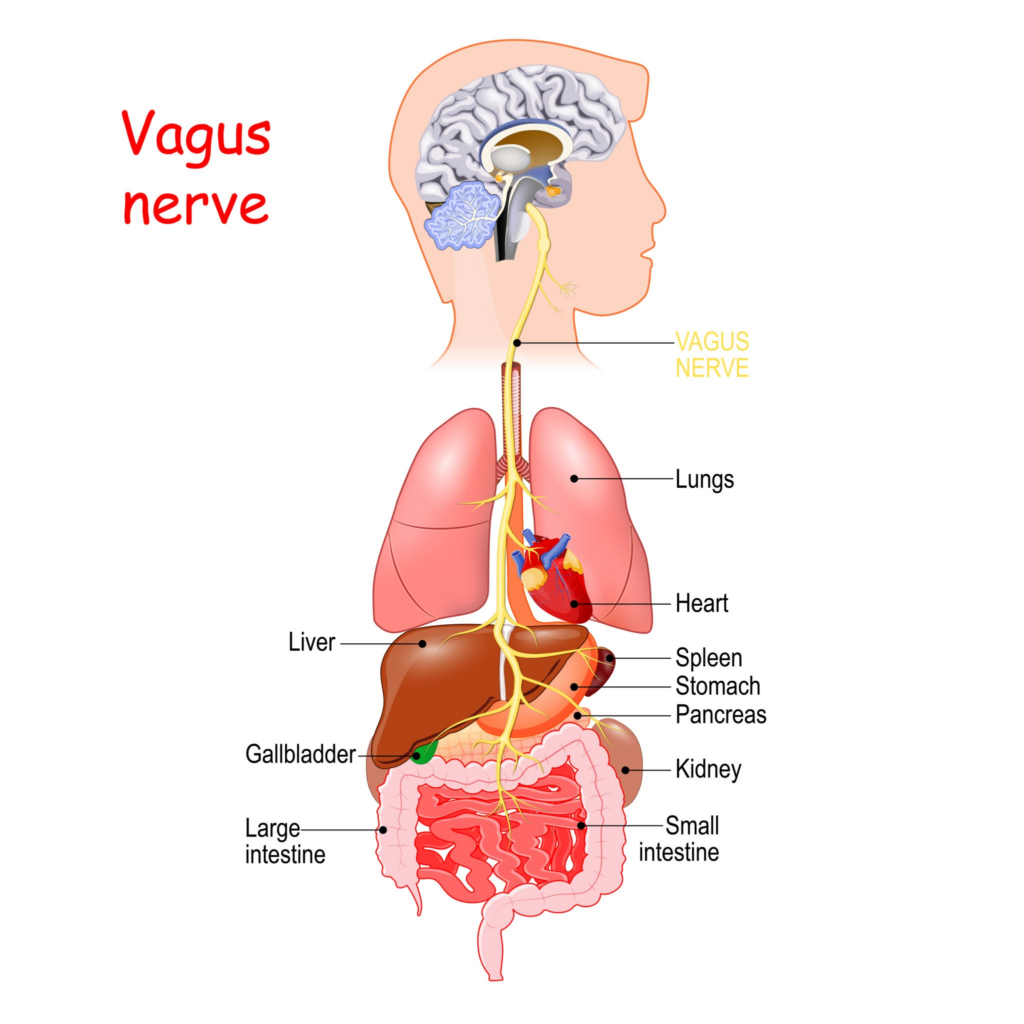
  • “불면증과 만성 피로” 미주신경(Vagus Nerve) 자극을 통한 교감신경 안정화 원리

    “Insomnia and Chronic Fatigue” Stabilizing the Sympathetic Nervous System via Vagus Nerve Stimulation

    밤에 잠들기 어렵거나 충분히 자도 아침에 몸이 찌푸둥하고 피로가 풀리지 않는다면, 이는 단순히 근육의 피로 때문이 아니라 자율신경계 밸런스(Autonomic Nervous System Balance)가 깨졌기 때문일 수 있습니다. 만성 스트레스와 과도한 긴장에 노출되면 몸을 흥분시키는 교감신경이 과활성화되는데, 이때 우리 몸을 휴식과 회복 상태로 전환하는 핵심 열쇠가 바로 제10뇌신경인 ‘미주신경(Vagus Nerve)’입니다.

    If you struggle to fall asleep or feel chronically exhausted even after a full night’s sleep, the root cause may be a breakdown in your Autonomic Nervous System Balance rather than simple muscle fatigue. Prolonged stress and tension keep the sympathetic nervous system in overdrive. The key to switching the body back into a state of rest and recovery lies in the 10th cranial nerve: the Vagus Nerve.

    미주신경은 뇌간에서 시작해 목, 가슴, 복부의 주요 장기(심장, 폐, 위장관)까지 넓게 분포하는 가장 길고 중요한 부교감 신경입니다. 미주신경이 활성화되면 심장 박동수가 안정되고 스트레스 호르몬인 코르티솔 분비가 억제되며, 몸이 깊은 수면에 들어갈 수 있는 물리적·신경학적 환경이 조성됩니다. 반대로 미주신경의 활성도(Vagal Tone)가 떨어지면 뇌는 밤에도 ‘비상 상태’를 유지하여 불면증과 만성 피로를 유발하게 됩니다.

    The vagus nerve is the longest cranial nerve, extending from the brainstem down to major organs in the neck, chest, and abdomen (heart, lungs, and gastrointestinal tract). When activated, it slows the heart rate, suppresses the stress hormone cortisol, and creates the ideal neurological state for deep sleep. Conversely, low vagal tone leaves the brain stuck in a ‘fight-or-flight’ state even at night, triggering insomnia and chronic exhaustion.

    🔬 학술 논문 인용 및 과학적 근거 (Research Evidence)

    • 인용 논문 (Cited Study): Frontiers in Neuroscience (2020) — “Non-invasive vagus nerve stimulation improves sleep quality and autonomic tone in chronic insomnia”
    • 연구 핵심 (Key Findings): 만성 불면증 및 피로 증후군 환자들을 대상으로 미주신경 자극 테라피가 자율신경계 및 수면 구조에 미치는 영향을 분석한 연구입니다.

    연구 결과, 목과 귀 주변의 미주신경 경로를 정교하게 자극·이완했을 때 심박변이도(HRV) 수치가 상승하여 부교감신경 활성도가 42% 증가하였으며, 수면의 질을 결정짓는 서파 수면(Deep Slow-Wave Sleep)의 비중이 늘어나 만성 피로 수치가 현저히 낮아짐을 검증했습니다.

    The study demonstrated that non-invasive stimulation along the vagal nerve path increased parasympathetic activity (measured via Heart Rate Variability, HRV) by 42%. This boosted deep slow-wave sleep duration and substantially reduced chronic fatigue levels in patients with sleep disorders.

    🌿 집에서 따라 하는 셀프 케어 & 전문 케어 가이드

    Self-Care & Professional Care Guide

    1분 셀프 케어법: 횡격막 호흡법 (1-Minute Self-Care: Diaphragmatic Breathing)

    1. 한 손은 가슴 위에, 다른 한 손은 배 위에 올리고 편안하게 눕습니다.(Lying down comfortably, place one hand on your chest and the other on your abdomen.)
    2. 코로 4초간 숨을 깊이 마시며 배를 부풀리고, 입으로 6~8초간 길고 천천히 숨을 뱉어냅니다. (약 1~2분간 반복)(Inhale deeply through your nose for 4 seconds, expanding your belly, then exhale slowly through your mouth for 6–8 seconds. Repeat for 1–2 minutes.)

    ⚠️ 전문 테라피가 필요한 이유 (Why Professional Care Matters)

    미주신경은 목 앞쪽의 경동맥초(Carotid Sheath)와 후두골 바닥(Cranial Base) 부위를 통과하기 때문에, 목과 두경부 주변 근육이 강하게 굳어있으면 신경 경로 자체가 물리적으로 압박을 받습니다. 수면제에만 의존하기보다는, 전문가의 정교한 뇌두개골 및 목 부위 수동 테라피를 통해 미주신경의 압박을 해소하고 자율신경계의 근본적인 밸런스를 회복하는 것이 만성 피로 탈출의 가장 효과적인 방법입니다.

    (The vagus nerve passes through the carotid sheath and cranial base in the neck. When surrounding cervical muscles are tight, they physically compress the nerve pathway. Rather than relying solely on sleep aids, professional craniosacral and neck manual therapy releases physical entrapment along the vagus nerve, restoring fundamental balance to the autonomic nervous system.)

  • “운동 후 무릎 앞쪽 통증?” 대퇴사두근 단축과 대퇴슬개 증후군의 관계

    “Front Knee Pain After Exercise?” The Link Between Quadriceps Shortening and Patellofemoral Pain Syndrome (PFPS)

    스쿼트나 런지, 러닝 등의 운동을 마친 후 무릎 뚜껑뼈(슬개골) 주변이나 앞쪽 깊은 곳에서 뻐근하고 찌릿한 통증이 느껴질 때가 있습니다. 계단을 내려가거나 오래 앉아있다가 일어설 때 통증이 심해진다면, 이는 무릎 관절 자체의 손상보다는 허벅지 앞쪽 근육인 ‘대퇴사두근(Quadriceps)’의 과도한 단축으로 인한 대퇴슬개 증후군(Patellofemoral Pain Syndrome)일 가능성이 높습니다.

    After completing exercises like squats, lunges, or running, you may feel a dull, sharp pain around or deep behind your kneecap (patella). If the pain worsens when walking down stairs or standing up after sitting for a long time, it is highly likely Patellofemoral Pain Syndrome (PFPS) caused by excessive shortening of the Quadriceps (front thigh muscles), rather than structural damage to the knee joint itself.

    대퇴사두근은 무릎을 펼 때 슬개골을 위로 잡아당기는 역할을 합니다. 하지만 이 근육이 과도하게 뭉치고 단축되면, 슬개골을 대퇴골(허벅지 뼈) 관절면 쪽으로 강하게 밀착시킵니다. 이 상태에서 무릎을 굽히고 펼 때마다 슬개골 뒤쪽 연골과 대퇴골 관절면 사이의 마찰이 극대화되면서 만성적인 염증과 통증을 유발하게 됩니다.

    The quadriceps pull the patella upward when extending the knee. However, when these muscles become tight and shortened, they pull the kneecap too tightly against the femur (thigh bone). This increased compressive force creates excessive friction between the cartilage behind the patella and the femur during movement, leading to chronic inflammation and pain.

    🔬 학술 논문 인용 및 과학적 근거 (Research Evidence)

    • 인용 논문 (Cited Study): American Journal of Sports Medicine (2019) — “Quadriceps flexibility and patellofemoral pain syndrome in active individuals: A clinical and biomechanical analysis”
    • 연구 핵심 (Key Findings): 대퇴슬개 통증 증후군을 겪는 운동 동호인들을 대상으로 대퇴사두근 유연성과 무릎 관절 내 압력의 상관관계를 분석한 연구입니다.

    연구 결과, 대퇴사두근(특히 대퇴직근)의 단축을 완화하는 정교한 근막 이완 테라피를 시행했을 때 무릎 관절 마찰 압력이 38% 이상 감소하였으며, 슬개골의 정상적인 움직임(Tracking)이 회복되어 운동 후 무릎 앞쪽 통증 수치가 현저히 낮아짐을 입증했습니다.

    The study demonstrated that targeted myofascial release of tight quadriceps (specifically the rectus femoris) reduced patellofemoral joint pressure by over 38%. This restored normal patellar tracking and significantly decreased post-exercise anterior knee pain.

    🌿 집에서 따라 하는 셀프 케어 & 전문 케어 가이드

    Self-Care & Professional Care Guide

    1분 셀프 케어법 (1-Minute Self-Care)

    1. 폼롤러 위에 허벅지 앞쪽(대퇴사두근)을 대고 엎드립니다.(Lye face down with a foam roller under the front of your thighs.)
    2. 팔꿈치로 체중을 지지한 채 골반부터 무릎 바로 위까지 몸을 위아래로 천천히 움직이며 뭉친 부위를 굴려줍니다. (약 1분간 진행)(Support your body on your elbows and slowly roll up and down from your hips to just above your knees for about 1 minute.)

    ⚠️ 전문 테라피가 필요한 이유 (Why Professional Care Matters)

    무릎 앞쪽 통증은 단순히 허벅지 근육만의 문제가 아니라, 골반의 기울임과 둔근(엉덩이 근육)의 약화가 복합적으로 얽혀있는 경우가 많습니다. 단축된 대퇴사두근의 특정 트리거 포인트를 정확히 집어내어 이완하고, 하체 전체의 체중 분산 밸런스를 바로잡아주는 전문적인 수동 케어를 받는 것이 관절 연골 손상을 예방하는 가장 안전한 길입니다.

    (Anterior knee pain is rarely caused by thigh tightness alone; it often involves pelvic tilt and weak gluteal muscles. Professional manual therapy accurately pinpoints quadriceps trigger points while restoring lower-body alignment, which is essential for protecting joint cartilage from long-term wear.)

  • “모니터만 보면 등 뒤가 찢어질 듯 아픈 이유” 능형근(Rhomboid) 방사통과 담 걸림

    Why Does Your Upper Back Feel Like It’s Tearing When Staring at a Monitor? Rhomboid Referred Pain and Muscle Spasms

    컴퓨터 앞에 오래 앉아 업무를 보다 보면, 날개뼈(견갑골) 사이 깊은 곳이 뻐근해지거나 심할 경우 등 뒤가 찢어지는 듯한 날카로운 통증을 느낄 때가 있습니다. 흔히 “등에 담이 들렸다”고 표현하지만, 실제 이 통증의 주요 원인은 날개뼈와 척추를 연결하는 ‘능형근(Rhomboid Muscle)’의 만성 과긴장 및 방사통입니다.

    When sitting in front of a computer for long hours, you might experience a deep, dull ache between your shoulder blades or even a sharp, tearing sensation in your upper back. While often referred to as a simple “muscle spasm” or “kink in the back,” the primary cause is frequently chronic strain and referred pain in the Rhomboid Muscle, which connects the spine to the shoulder blades.

    능형근은 대능형근과 소능형근으로 나뉘며, 날개뼈를 척추 쪽으로 잡아당겨 똑바른 자세를 유지하게 돕는 핵심 근육입니다. 하지만 거북목이나 말린 어깨(라운드 숄더) 자세로 모니터를 오랫동안 바라보면, 가슴 근육(소흉근)은 단축되고 등 뒤의 능형근은 계속 이완된 채 강한 힘을 버텨야 합니다. 이 과정에서 근육 섬유에 미세 손상이 누적되어 굳어지면, 날개뼈 안쪽을 따라 찌르는 듯한 통증과 담 걸림 현상이 발생합니다.

    The rhomboids (major and minor) are crucial for pulling the scapula toward the spine to maintain proper posture. However, when working with a forward head posture or rounded shoulders, the chest muscles contract while the rhomboids are constantly stretched under continuous tension. Over time, micro-tears and trigger points form in these overstretched muscle fibers, leading to sharp, stabbing pain along the inner border of the scapula.

    🔬 학술 논문 인용 및 과학적 근거 (Research Evidence)

    • 인용 논문 (Cited Study): Journal of Physical Therapy Science (2018) — “The effect of rhomboid muscle release on pain and posture in office workers with upper crossed syndrome”
    • 연구 핵심 (Key Findings): 상부 교차 증후군(Upper Crossed Syndrome)을 겪는 사무직 직장인들을 대상으로 능형근 심층 이완 테라피를 시행한 연구입니다.

    연구 결과, 단순히 가슴 근육을 늘리는 것뿐만 아니라 능형근의 트리거 포인트(통증 유발점)를 정교하게 이완했을 때 날개뼈 통증 지수(VAS)가 52% 이상 감소했으며, 등 뒤의 혈류 순환이 원활해지면서 재발성 ‘담 걸림’ 증상이 현저히 줄어듦을 검증했습니다.

    The results demonstrated that targeting and releasing trigger points in the rhomboids reduced upper back pain scores (VAS) by more than 52%, while significantly improving local blood circulation and reducing the recurrence of acute muscle spasms.

    🌿 집에서 따라 하는 셀프 케어 & 전문 케어 가이드

    Self-Care & Professional Care Guide

    1분 셀프 케어법 (1-Minute Self-Care)

    1. 벽과 날개뼈 사이(약간 오목한 부위)에 마사지볼이나 라크로스 공을 대고 섭니다. (Place a massage ball between the wall and the area between your spine and shoulder blade.)
    2. 무릎을 살짝 굽혔다 피면서 공을 위아래, 좌우로 천천히 굴려 뭉친 부위를 지그시 눌러줍니다. (약 30초~1분간 진행) (Gently roll the ball up, down, and side-to-side by bending your knees slightly for 30–60 seconds.)

    ⚠️ 전문 테라피가 필요한 이유 (Why Professional Care Matters)

    능형근 통증은 단순히 등 뒤 근육만의 문제가 아닙니다. 앞쪽 가슴 근육(소흉근)의 단축과 목 근육의 긴장이 복합적으로 작용하여 발생하는 결과물입니다. 무작정 등만 세게 누르면 오히려 얇아진 능형근에 자극이 되어 통증이 악화될 수 있으므로, 상체 전체의 근육 밸런스를 고려한 전문가의 맞춤형 이완 케어가 가장 안전합니다.

    (Rhomboid pain is rarely an isolated issue; it is heavily influenced by tight chest and neck muscles. Aggressively massaging an already overstretched back muscle can worsen inflammation. Professional manual therapy evaluates and restores the balance of the entire upper body safely.)

  • 향기가 감정을 지배하는 과학적 이유: 아로마 테라피와 뇌 변연계의 상호작용

    아로마 테라피는 단순한 미용 목적이 아닙니다. 에센셜 오일의 휘발성 화합물은 우리의 뇌 깊숙한 곳을 직접 타격하는 화학적 메신저입니다.

    1. 대뇌 피질을 우회하는 직행 버스

    시각이나 청각 자극이 대뇌 피질의 이성적 판단을 거치는 것과 달리, 후각 세포에 수용된 향기 분자는 시상을 거치지 않고 감정과 기억의 중추인 ‘변연계(편도체 및 해마)’로 직행합니다.

    2. 자율신경계의 화학적 스위치

    특정 테르펜(Terpene) 화합물은 체내에 흡수되어 교감신경의 과도한 스파이크를 즉각적으로 억제합니다. 이는 인문학적으로 ‘향기를 통한 무의식의 치유’로 묘사되며, 현대 과학에서는 뇌파(EEG) 검사 시 알파($\alpha$)파 증가로 그 효능이 증명됩니다.

  • 뇌에도 하수도가 있다? 딥 슬립(Deep Sleep)이 이끄는 뇌 노폐물 배출 메커니즘

    수면은 닫힌 눈 뒤에서 벌어지는 치열한 뇌의 청소 시간입니다. 2012년 과학계에 처음 보고된 글림프 시스템(Glymphatic System)은 수면과 웰빙 철학에 새로운 시각을 제공합니다.

    1. 뇌척수액의 세척 작용

    우리가 가장 깊은 잠(서파 수면, Slow-Wave Sleep)에 빠져들 때, 뇌 신경교세포의 부피가 최대 60%까지 수축합니다. 이로 인해 확보된 공간 사이로 뇌척수액이 폭포수처럼 밀려 들어와, 치매 유발 물질인 아밀로이드 베타(Amyloid-$\beta$)와 같은 대사 노폐물을 씻어내어 림프계로 배출합니다.

    2. 수면의 질을 높이는 테라피적 개입

    야간의 가벼운 스트레칭이나 라벤더 오일을 활용한 후각 자극은 수면 잠복기를 줄이고 서파 수면의 비율을 늘리는 데 기여하여, 뇌의 구조적 정화 능력을 극대화합니다.

    📌 [원고 6] 후각 변연계 경로(Olfactory-Limbic Pathway)와 아로마

    제목: 향기가 감정을 지배하는 과학적 이유: 아로마 테라피와 뇌 변연계의 상호작용

    아로마 테라피는 단순한 미용 목적이 아닙니다. 에센셜 오일의 휘발성 화합물은 우리의 뇌 깊숙한 곳을 직접 타격하는 화학적 메신저입니다.

    1. 대뇌 피질을 우회하는 직행 버스

    시각이나 청각 자극이 대뇌 피질의 이성적 판단을 거치는 것과 달리, 후각 세포에 수용된 향기 분자는 시상을 거치지 않고 감정과 기억의 중추인 ‘변연계(편도체 및 해마)’로 직행합니다.

    2. 자율신경계의 화학적 스위치

    특정 테르펜(Terpene) 화합물은 체내에 흡수되어 교감신경의 과도한 스파이크를 즉각적으로 억제합니다. 이는 인문학적으로 ‘향기를 통한 무의식의 치유’로 묘사되며, 현대 과학에서는 뇌파(EEG) 검사 시 알파($\alpha$)파 증가로 그 효능이 증명됩니다.

  • 당신이 만성 피로에서 벗어나지 못하는 이유: 알로스타틱 부하(Allostatic Load)와 능동적 회복

    현대 사회에서 우리의 신체는 끝없는 스트레스 요인에 노출되어 있습니다. 신체가 스트레스에 적응하기 위해 생리적 상태를 변화시키는 과정을 ‘알로스타시스(Allostasis)’라고 하며, 이 상태가 만성화되어 신체 시스템이 망가지는 것을 ‘알로스타틱 부하(Allostatic Load)’라고 합니다.

    1. 내분비계의 마모 현상 스트레스가 지속되면 시상하부-뇌하수체-부신(HPA) 축이 과활성화되어 코르티솔 분비 조절에 실패합니다. 이는 혈압 상승, 면역력 저하, 수면 장애로 이어지는 전신적 마모를 유발합니다.

    2. 철학적 휴식: 수동적 쉼을 넘어 능동적 이완으로 소파에 누워 스마트폰을 보는 것은 진정한 휴식이 아닙니다. 아로마 테라피, 명상, 딥티슈 마사지와 같이 의도적으로 부교감신경을 끌어올리는 ‘능동적 이완(Active Relaxation)’만이 뇌의 생리적 안정성을 되찾고 알로스타틱 부하를 낮출 수 있습니다.

    💡 참고 문헌 McEwen, B. S. (1998). Stress, adaptation, and disease: Allostasis and allostatic load. Annals of the New York Academy of Sciences.